Discovery Research to Determine ICP and UVP
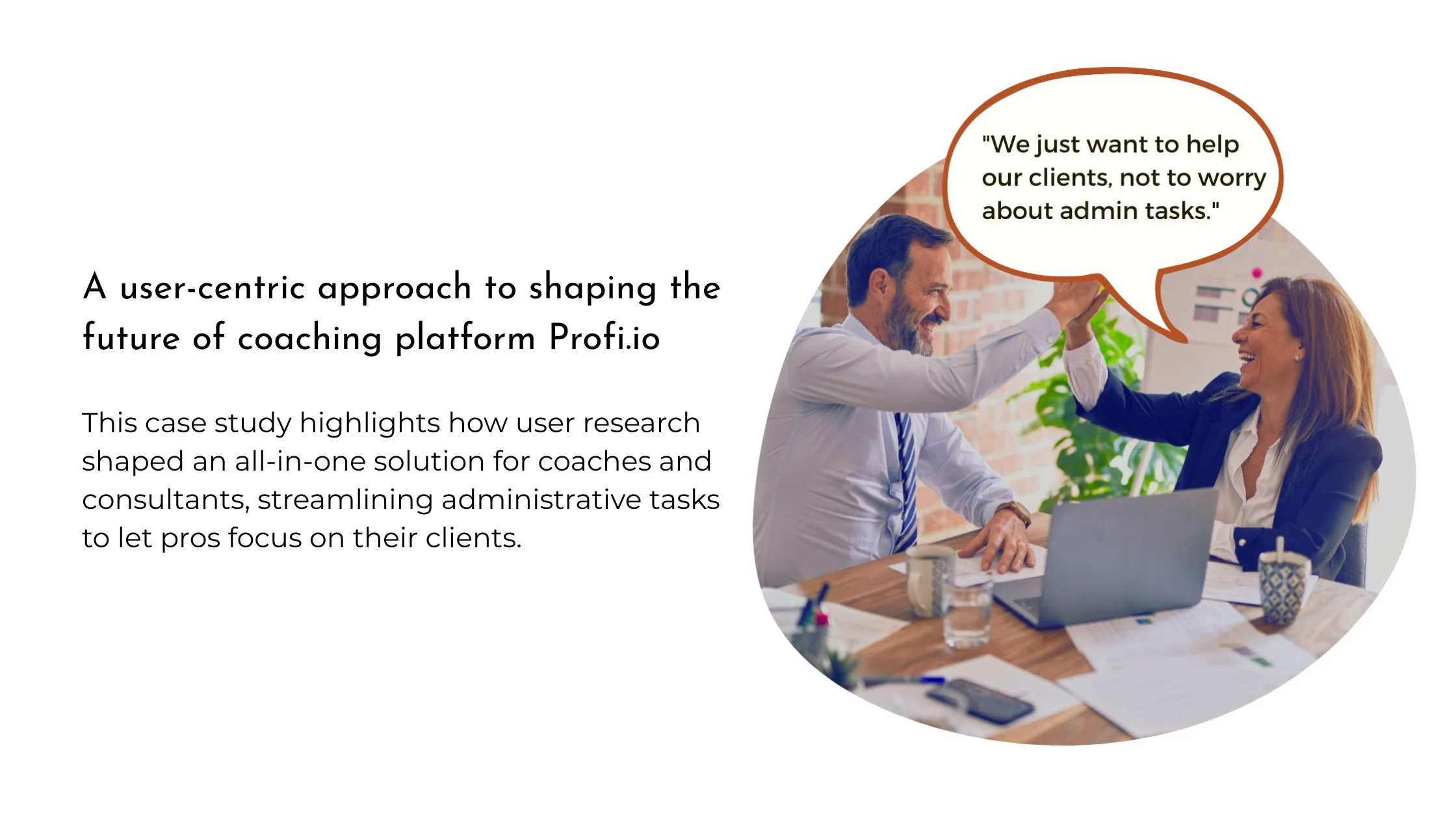
The platform had a clarity problem. Its value proposition was undefined, the target audience was too broad, and features weren't effectively serving the people they were built for. The business needed research to redefine who it was building for, and what problem it was actually solving.
Research Impact
Discovery research redefined the Ideal Customer Profile, shaped the product roadmap for three quarters, and directly contributed to a 28% reduction in customer churn. Insights led to the prioritization of scheduling upgrades and the scoping of a new Engagement feature.
Product Gaps Identified
In-depth interviews with coaches, trainers, consultants, and their clients, paired with existing data analysis, surfaced critical product gaps that directly shaped new design priorities.
Product Roadmap Shaped
Findings influenced priorities for three consecutive quarters, including the scheduling upgrade and the new Engagement feature.
Reduction in Customer Churn
Research-driven product decisions contributed directly to a 28% drop in churn over the following quarter by aligning the roadmap with actual user needs.
Research Process
Step 1: Defining the Research Goals
A broad brief produces broad insights.
When the initial ask was simply “uncover unique value propositions for our customers,” my first job was to make the question answerable.
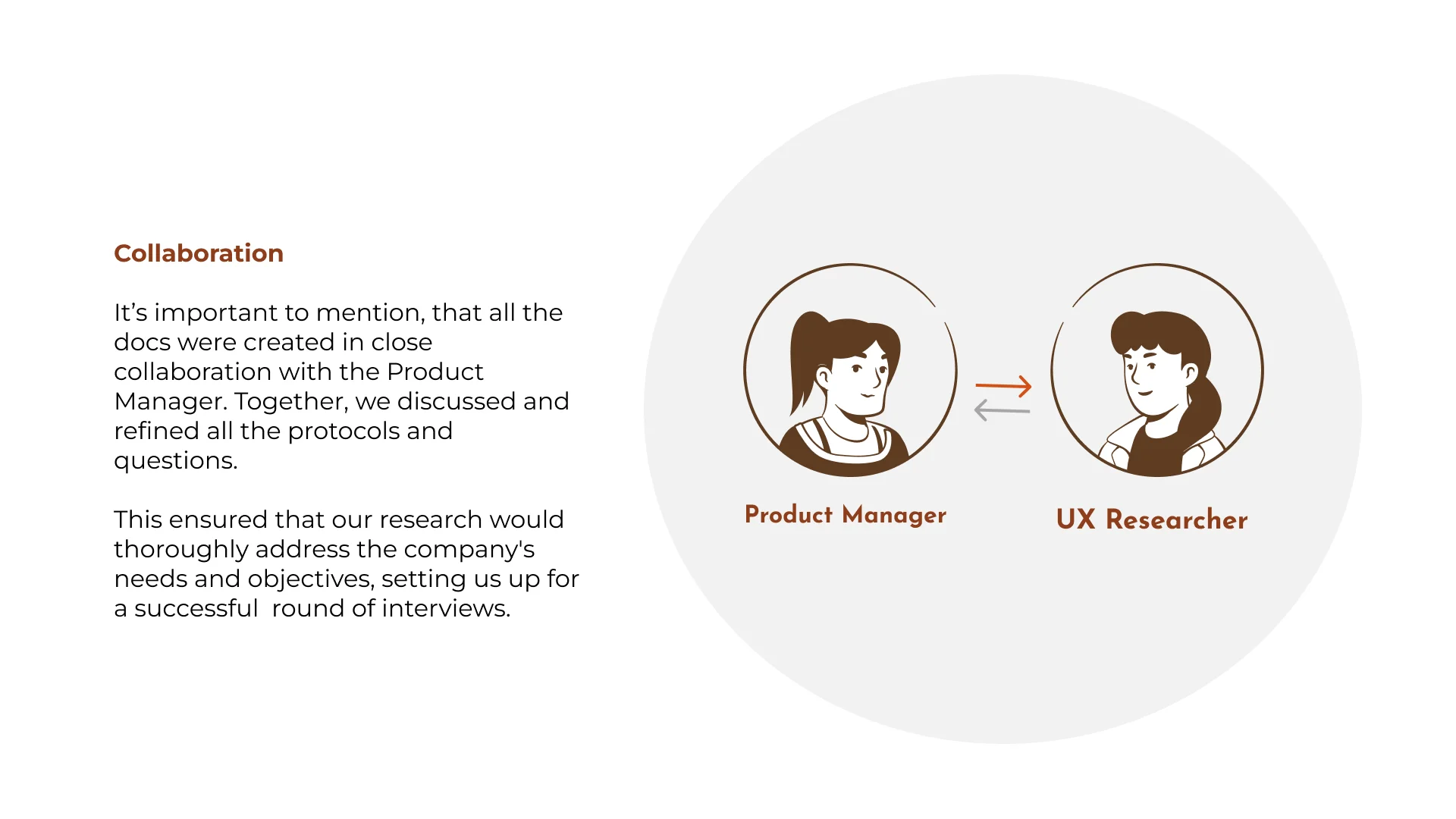
Sharpening the brief through collaboration
I started by meeting with the Product Manager and Customer Success team to synthesize what they were already hearing from customers. The signal was consistent: coaches, trainers, and consultants felt constrained by how Profi.io structured its services, particularly around packages and programs. It pointed to a gap between how the platform thought about service delivery and how practitioners actually worked.
That conversation produced a clear hypothesis to build research around:
- What does the native service delivery process actually look like, and where does it break down?
- What is the core problem this product can credibly solve?
- What value proposition would resonate most strongly with this audience?
- Where is there genuine room to differentiate from competitors?
Step 2: Research Approach
A competitive audit had revealed a crowded market, yet customers kept choosing Profi.io. The question was why.
To find out, I designed a three-method approach that would triangulate insights from different angles making the most of limited time and budget.
Interviews with both service providers and their clients. Understanding both sides of the relationship would reveal not just what professionals wanted, but what would actually improve outcomes for their clients.
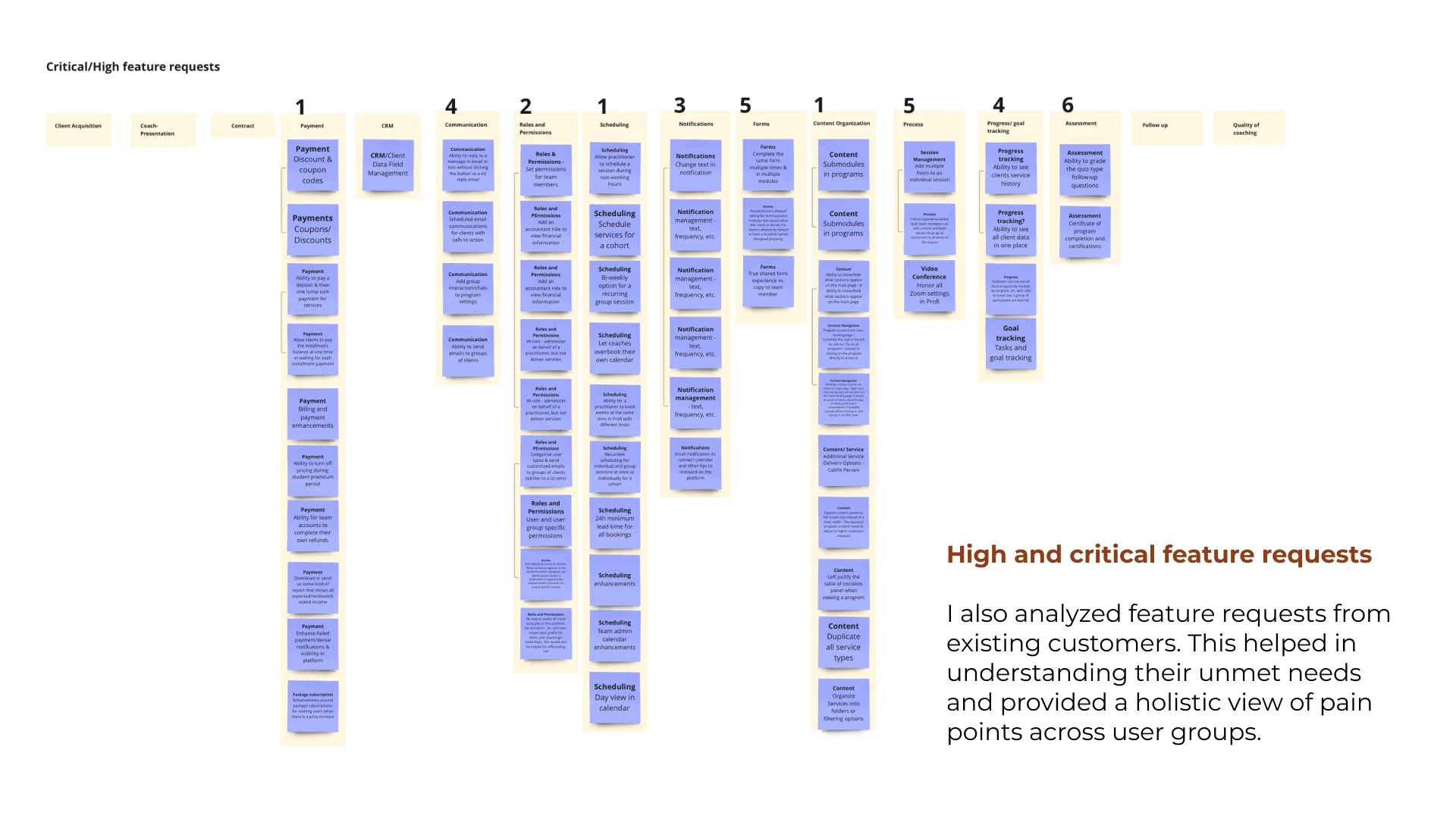
Our Customer Success team had been logging feature requests on ProductBoard. Analyzing this existing data surfaced patterns in what users were already asking for, no recruitment required.
The Customer Success team had daily conversations with users. Their qualitative insights about the reasons why customers chose Profi.io, or struggled with it provided context that data alone couldn't capture.
This combination gave us breadth (feature request patterns), depth (user interviews), and internal perspective (CS insights), maximizing learning while respecting our resource constraints.
Step 3: Participant Recruitment
To understand the platform’s value, I needed both sides of the service relationship.
Coaches, trainers, and consultants don’t just use Profi.io, they use it to serve clients. A complete picture meant understanding both the provider experience and what their clients actually felt on the receiving end.
Who I Interviewed
- Team-based practitioners (2+ person teams): to surface collaboration pain points, not just solo workflows
- Established practices (5+ active clients): ensuring participants had real, systemized processes to reflect on
- Diverse representation: varied business models, client loads, and practice types
Recruitment Channels
All participants were compensated for their time. A screener survey ensured every recruit met the criteria before the first conversation.
Step 4: Prepare & Conduct Interviews
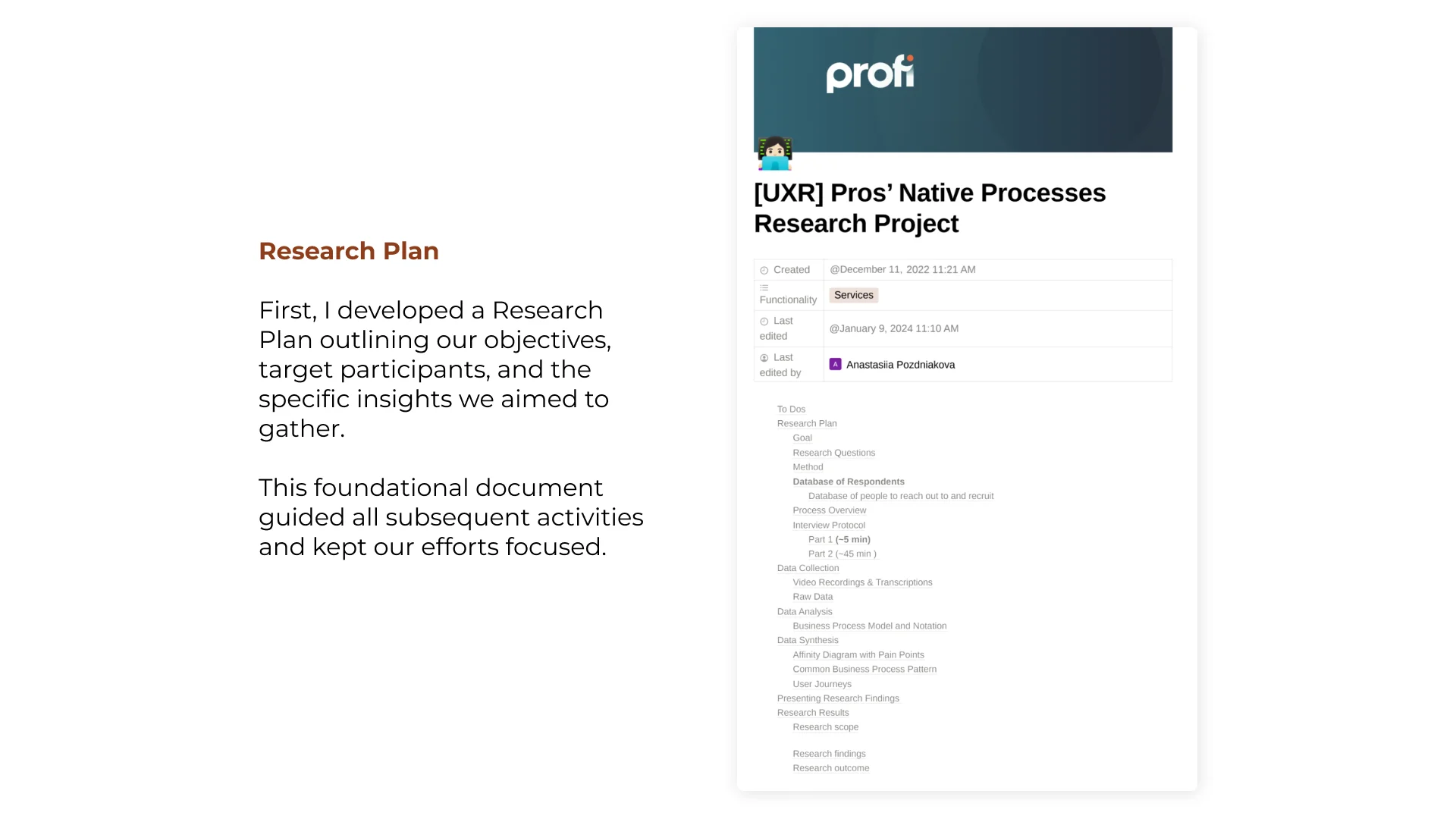
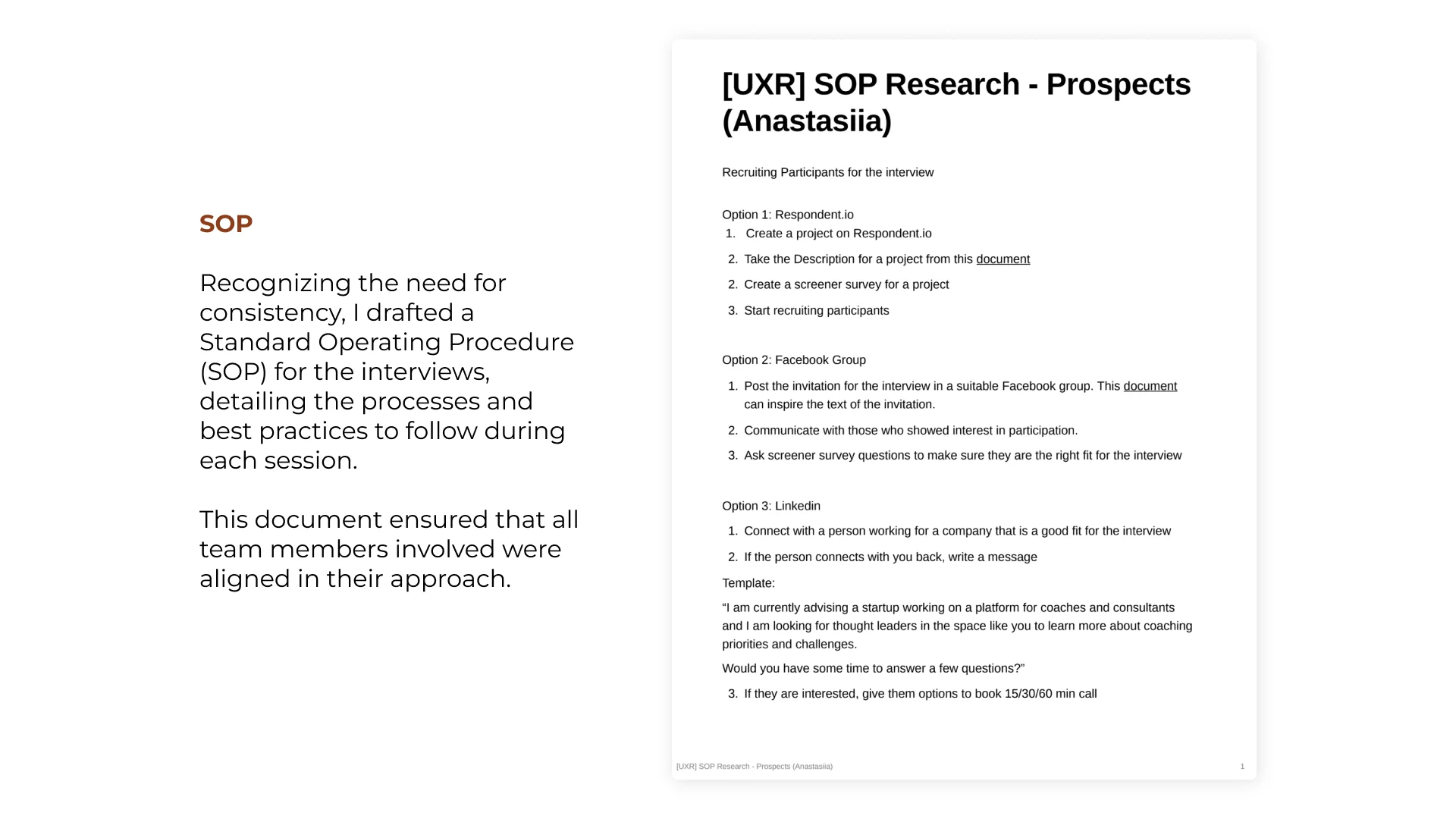
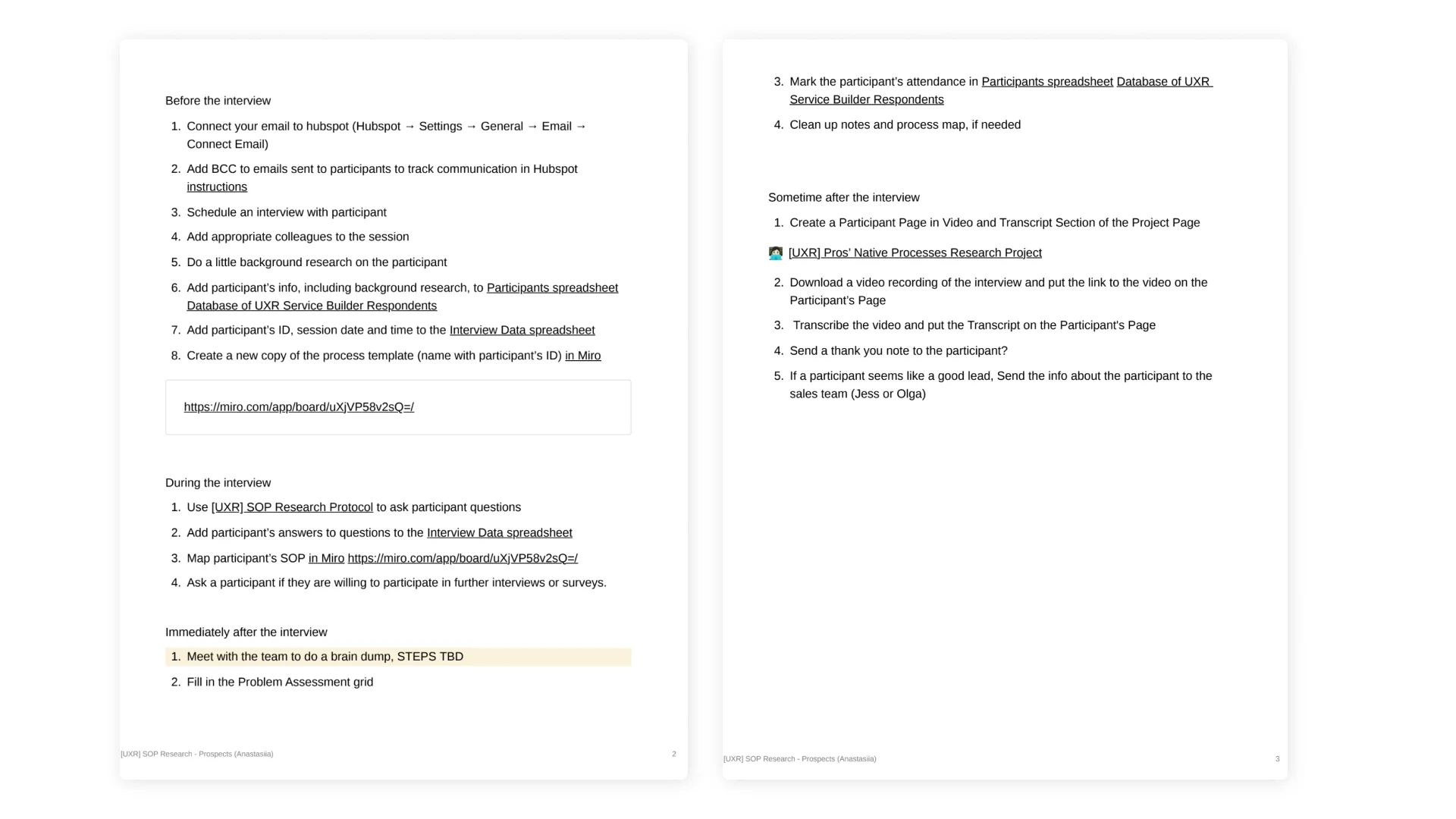
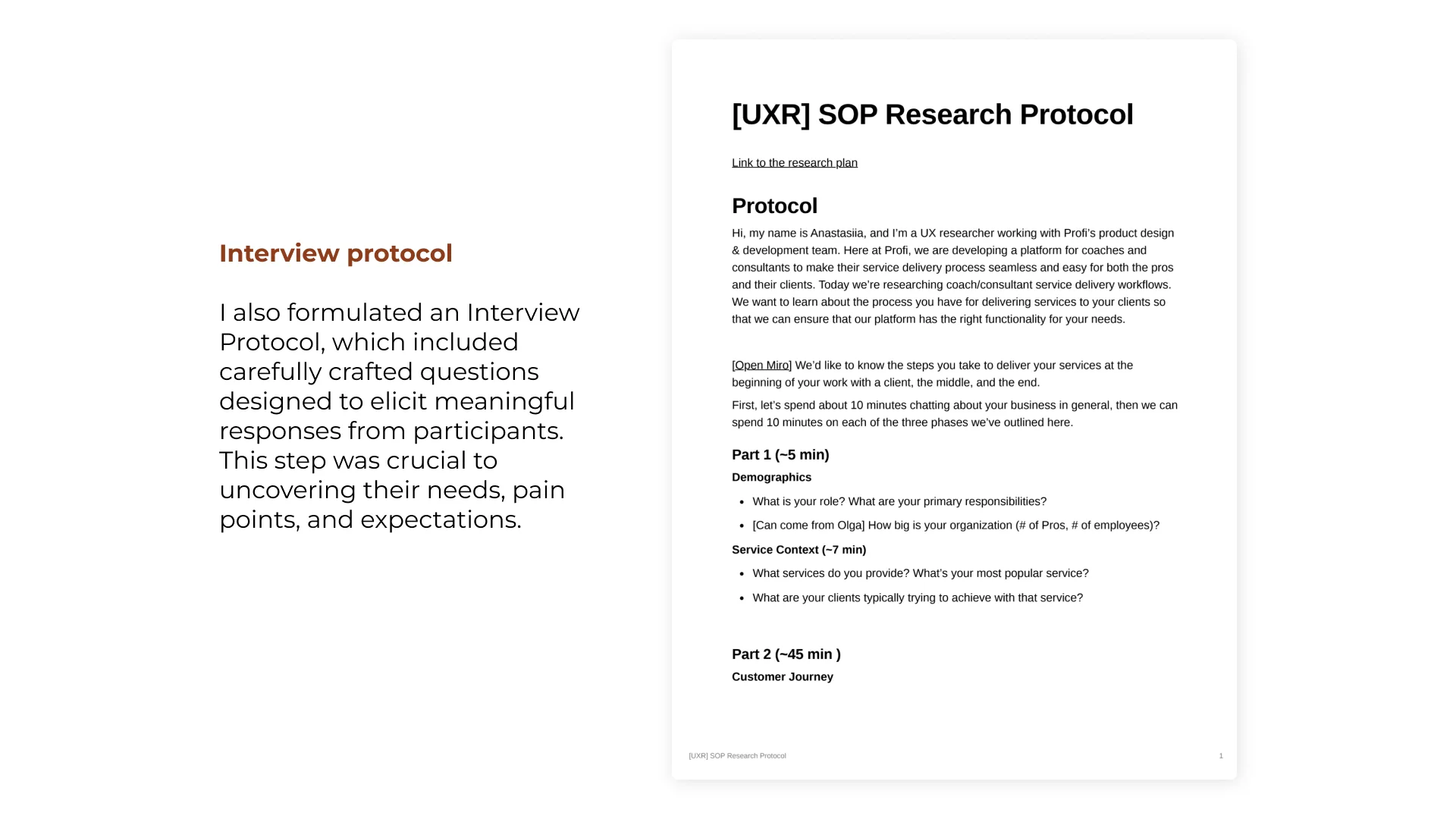
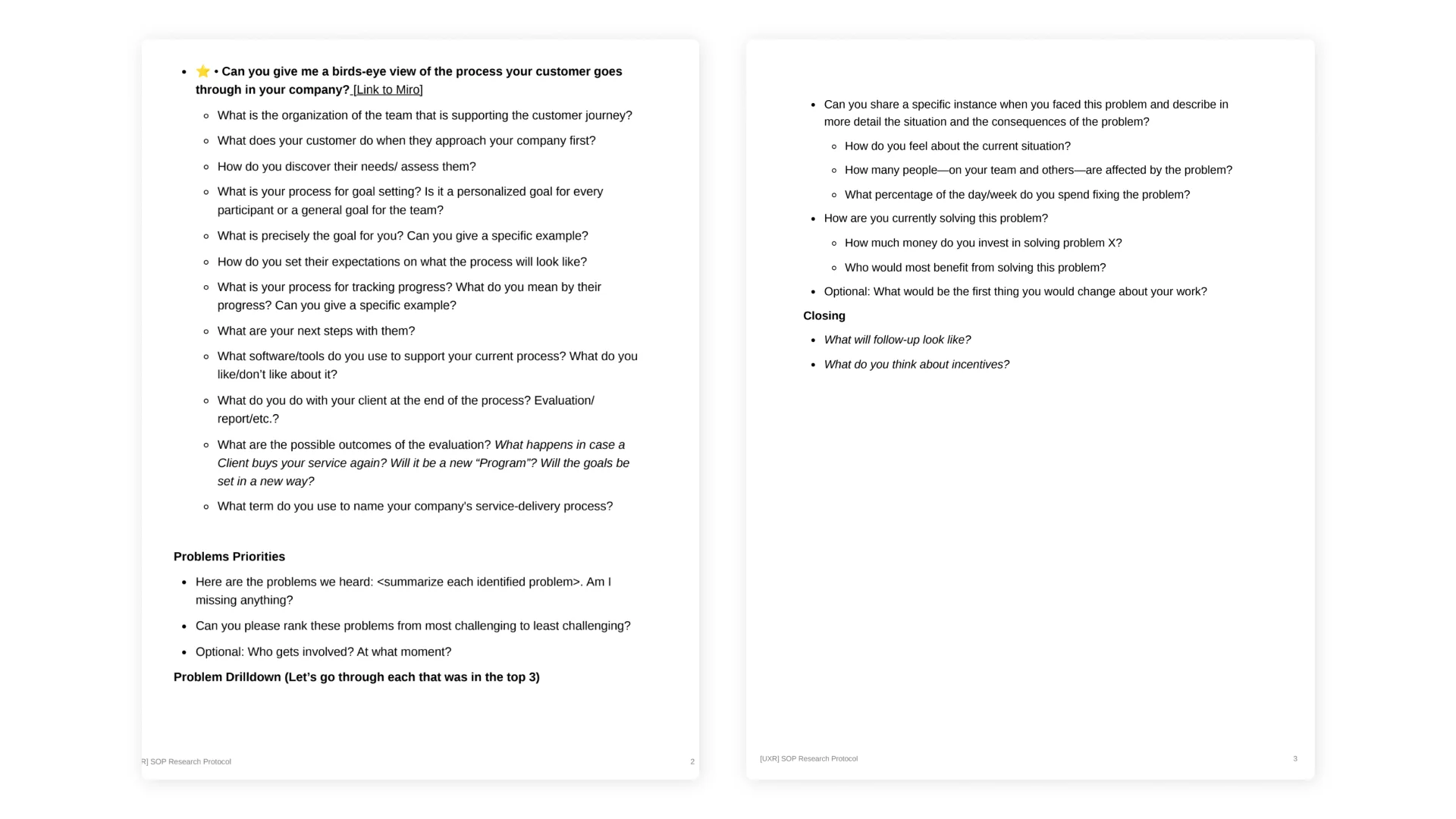
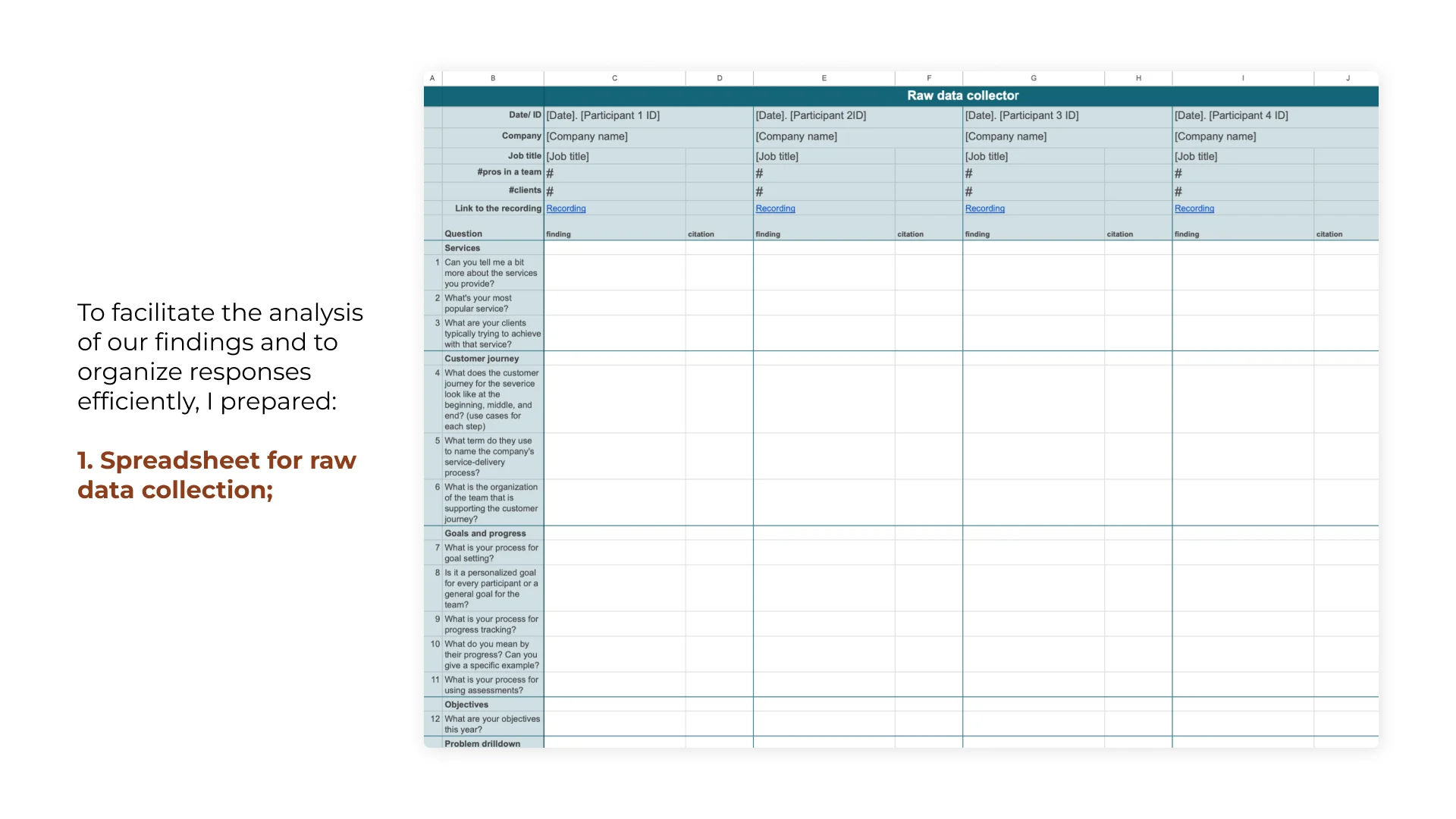
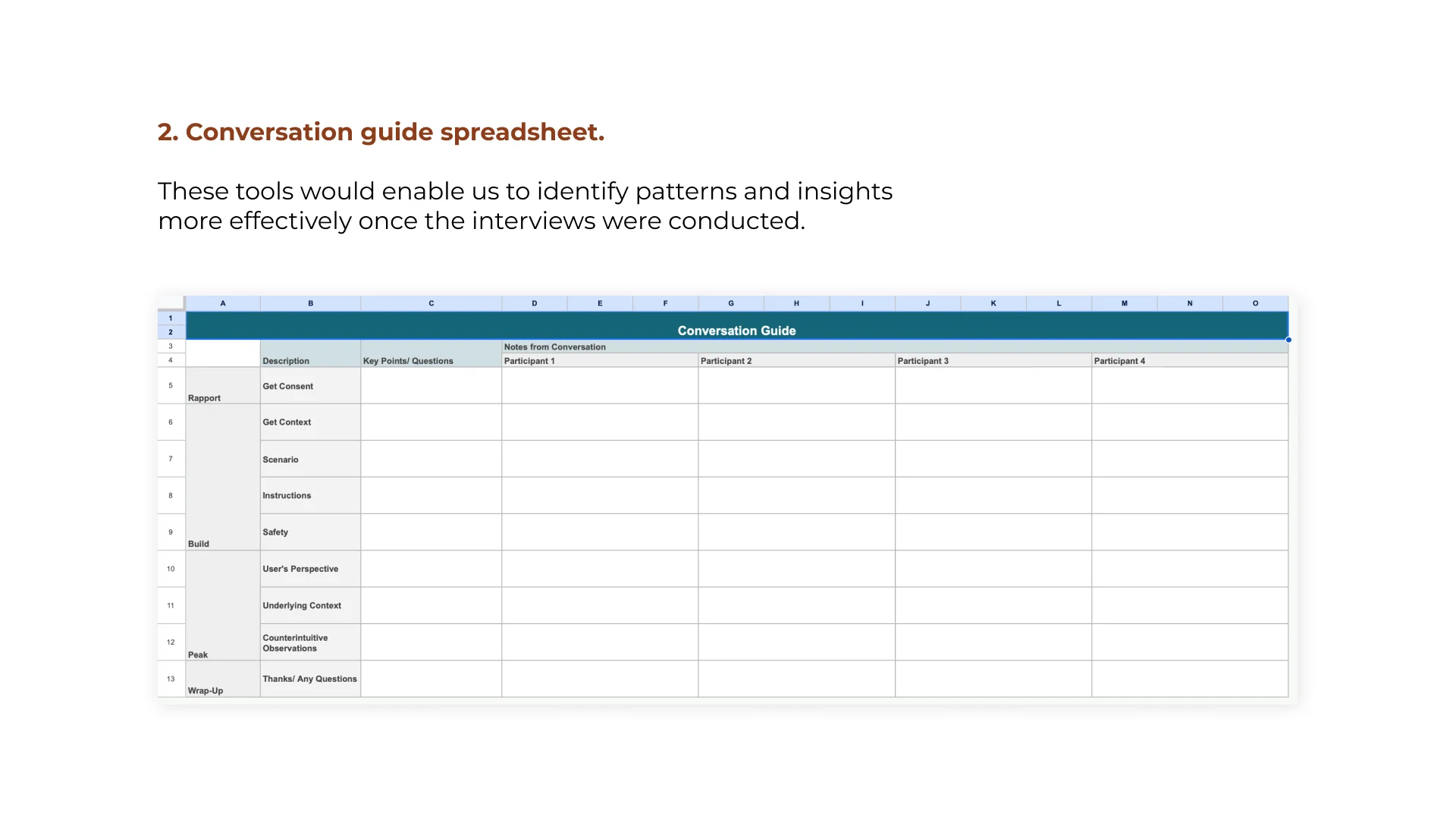
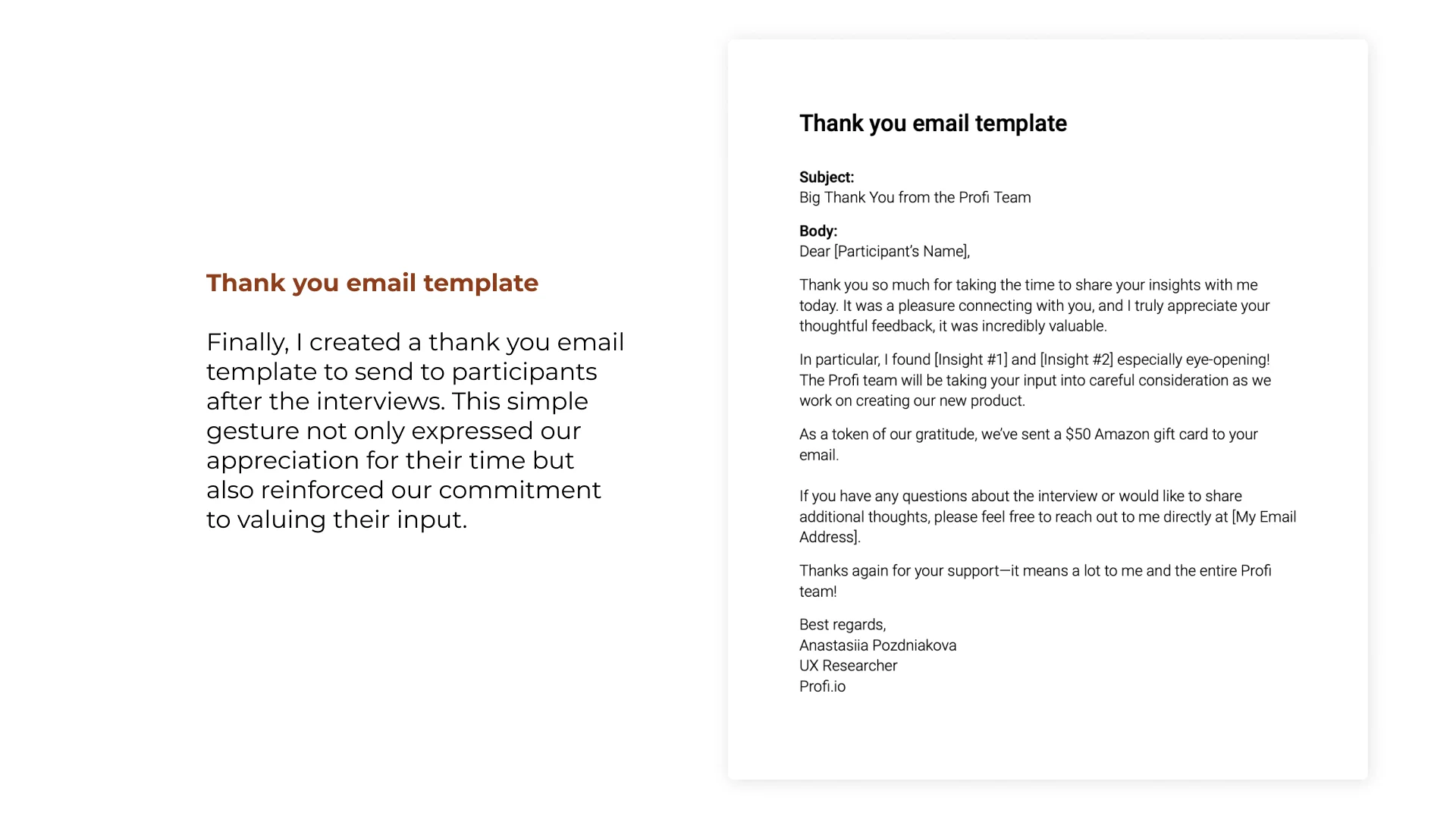
Pre-interview documentation was created for every session (check the slides below)
Core interview rules
I followed these rules to ensure the success of each user interview
Invite Team Members
I open interviews to the wider team: product managers, designers, developers, stakeholders. Whoever can benefit from hearing users directly is welcome to observe. It keeps the team aligned on real user needs and replaces secondhand summaries with firsthand understanding.
Record and Take Notes
Each interview was recorded, and either I or the UX Research intern took detailed notes using the Interview Guide spreadsheet. This dual approach ensured we captured everything accurately without breaking the flow of conversation.
Debrief with the Team
After each interview, we held a 15-minute debrief to review notes and surface key findings while the conversation was still fresh. This helped identify immediate action items and shaped the direction of the next session.
Send a Thank You Email
Following each session, I sent a thank you note to the participant. Where time allowed, I also updated the Raw Data spreadsheet — keeping everything organized and ready for analysis.
Step 5: Making Sense of the Data
Raw interview data doesn’t speak for itself. I used a four-stage synthesis process to move from scattered observations to a clear, product-ready picture of where Profi.io could create the most value.
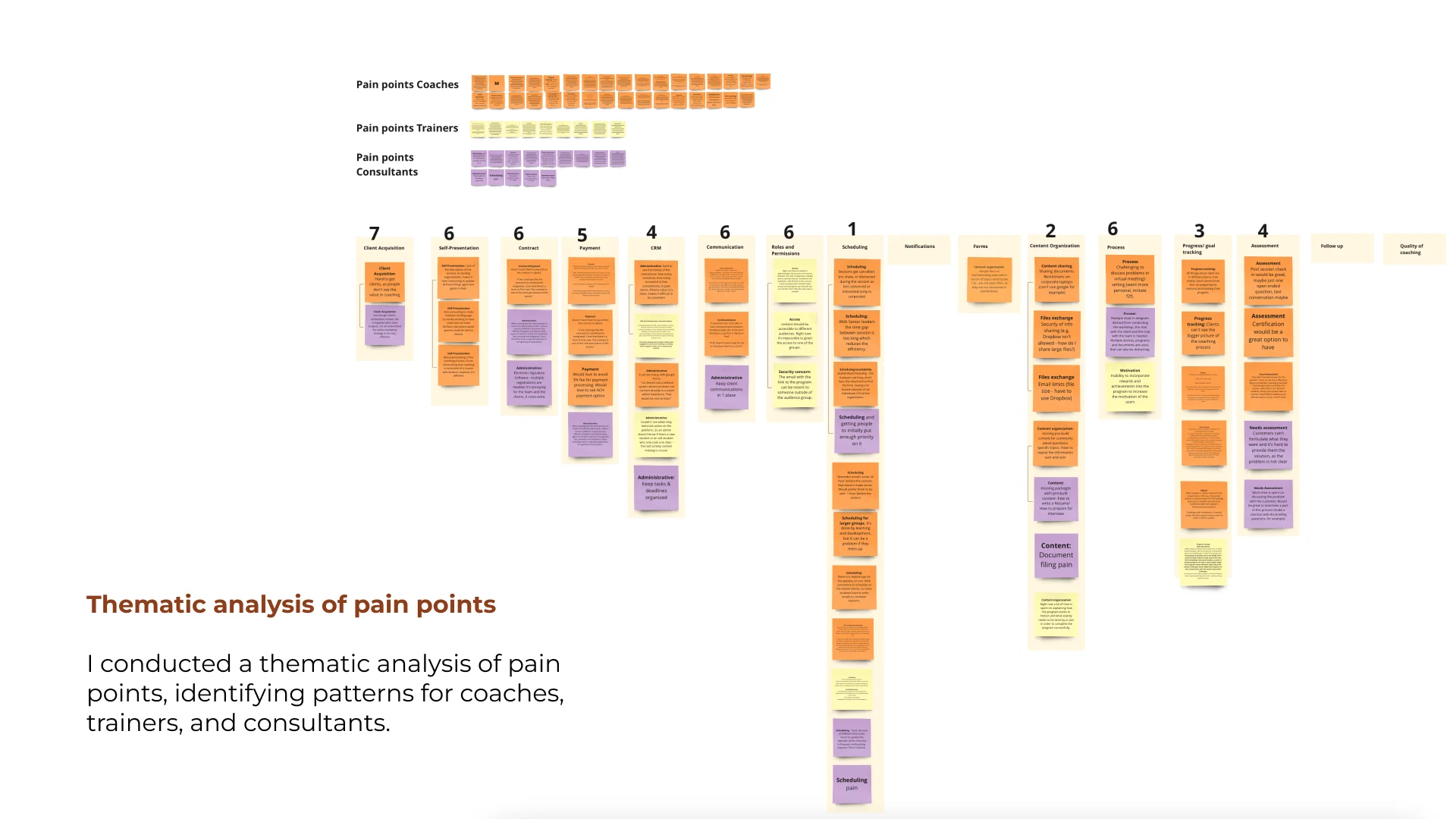
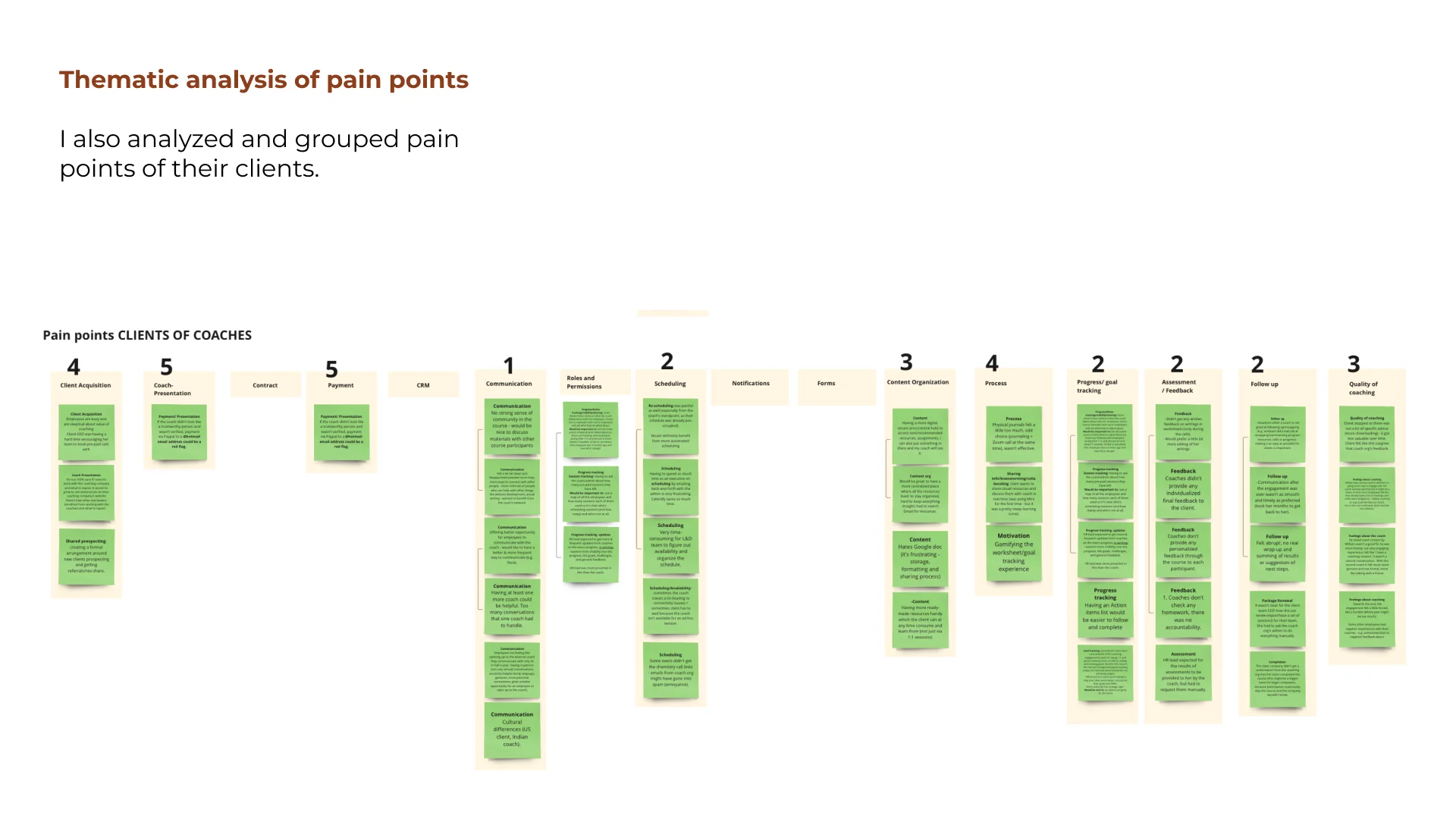
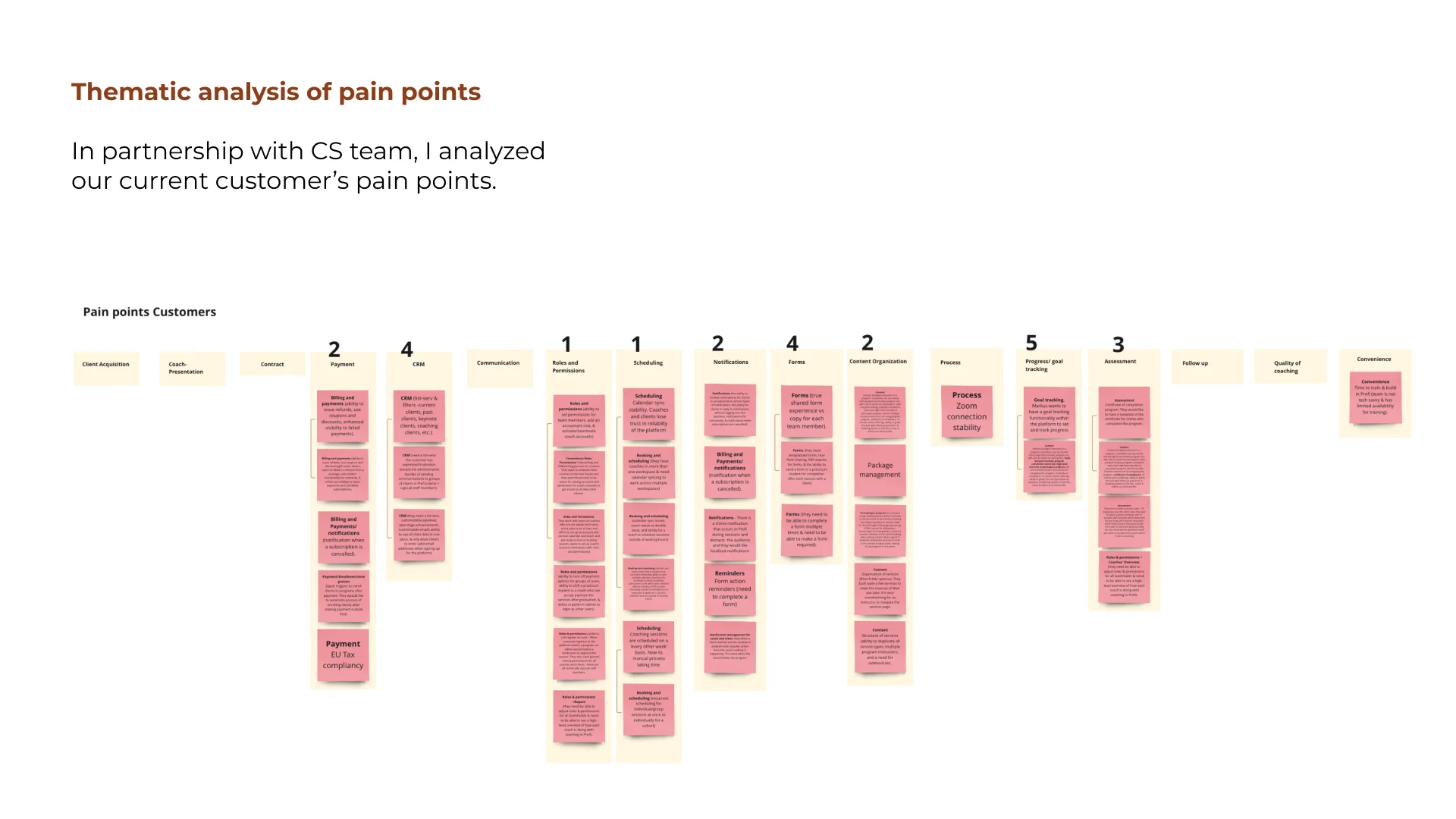
Affinity Mapping
I grouped pain points and observations from coaches, trainers, and consultants into themed clusters to surface the patterns that kept appearing across roles and contexts, separating signal from noise.
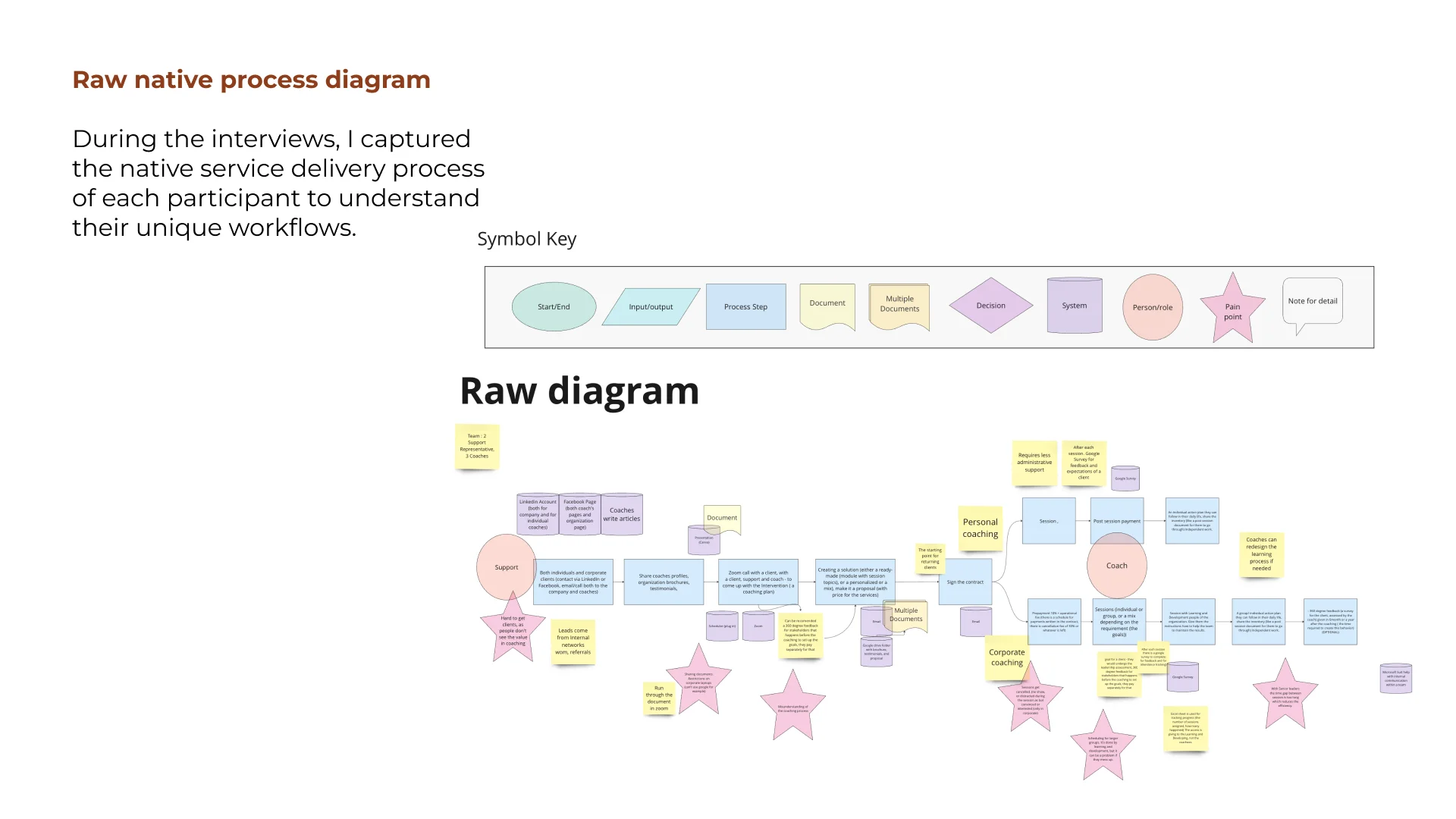
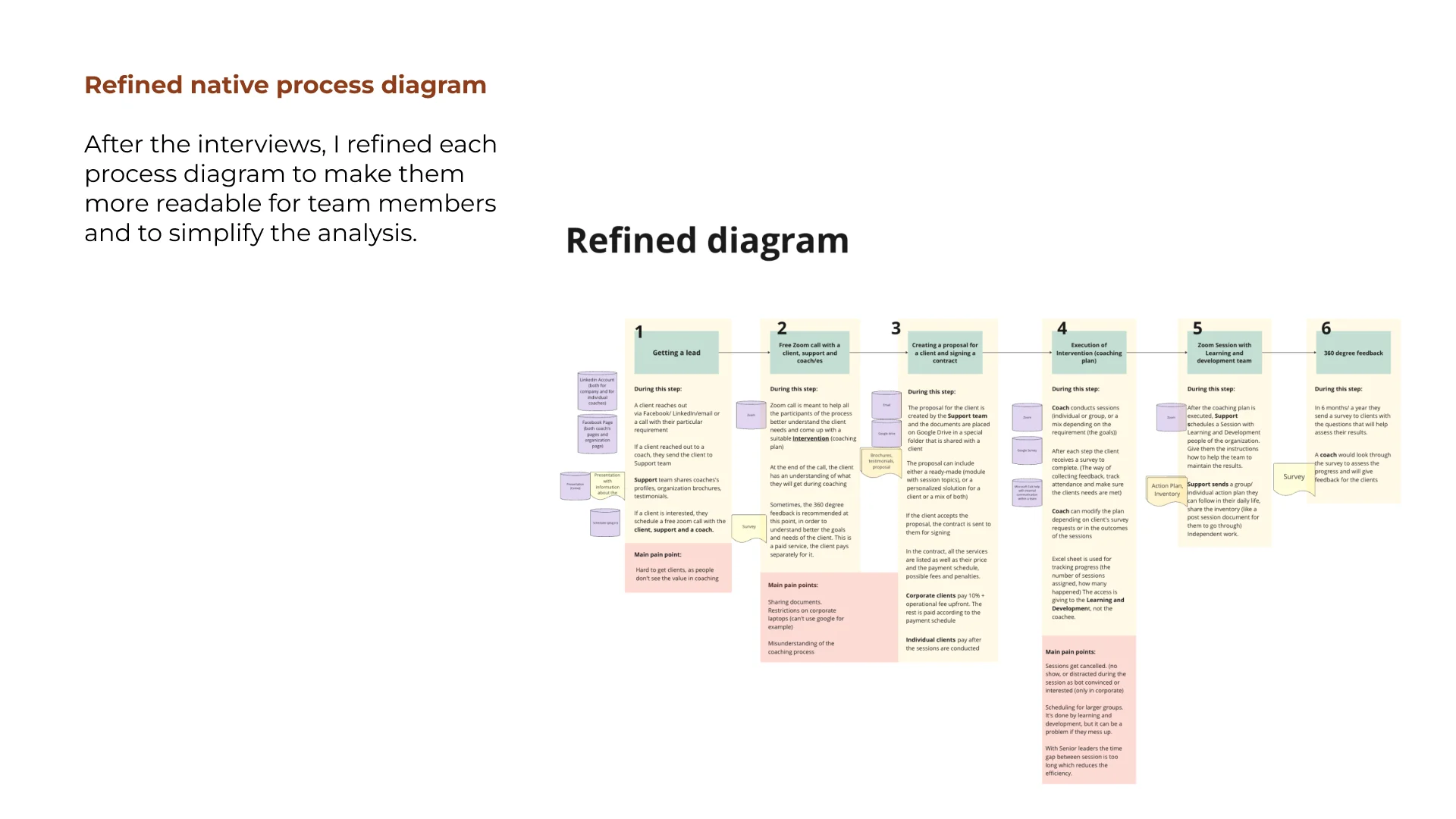
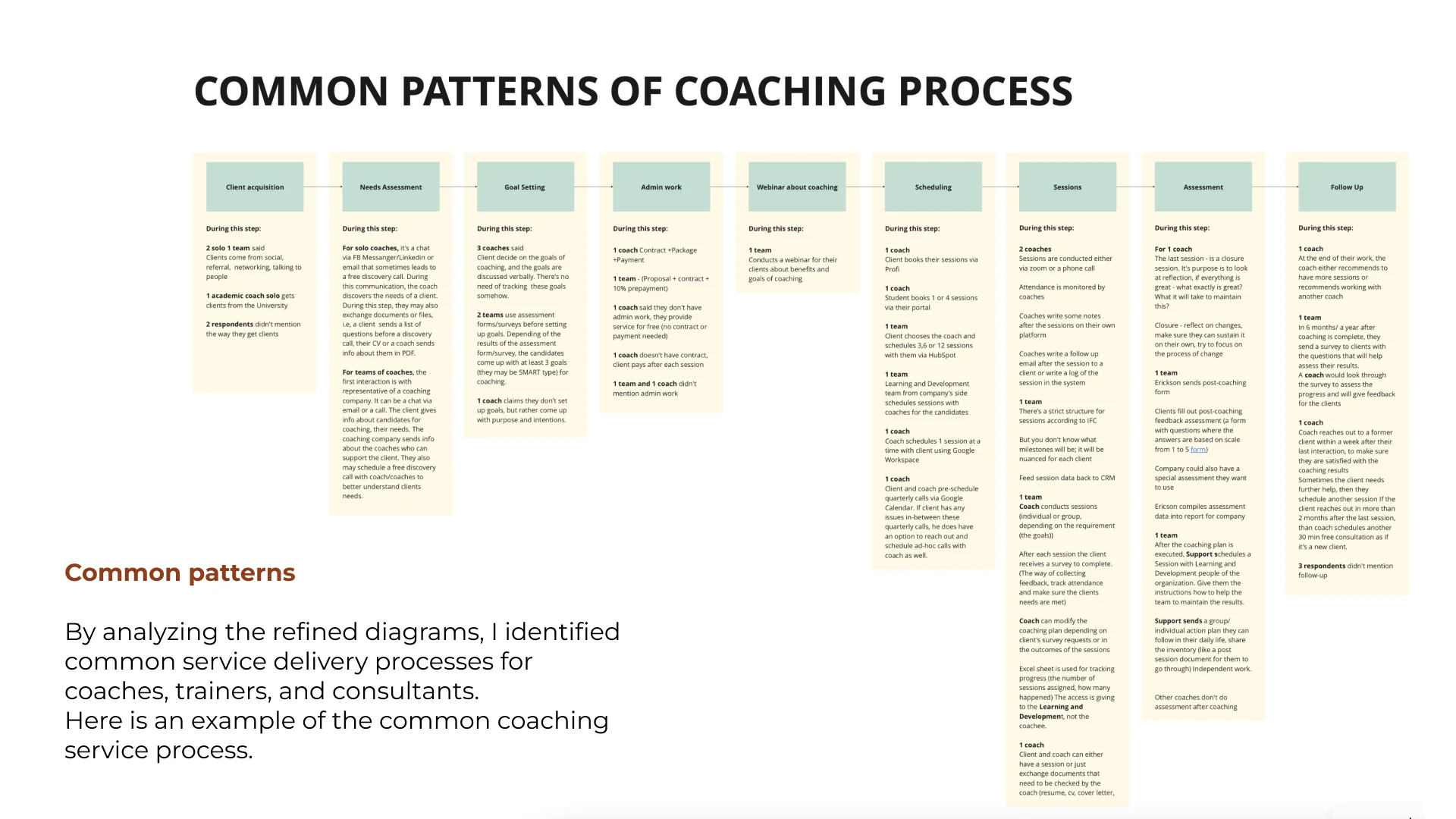
Process Mapping
I mapped the typical service delivery workflow for each role into diagrams, then layered in the pain points from the affinity map. This made it possible to see not just what was painful, but where in the workflow it broke down and for whom.
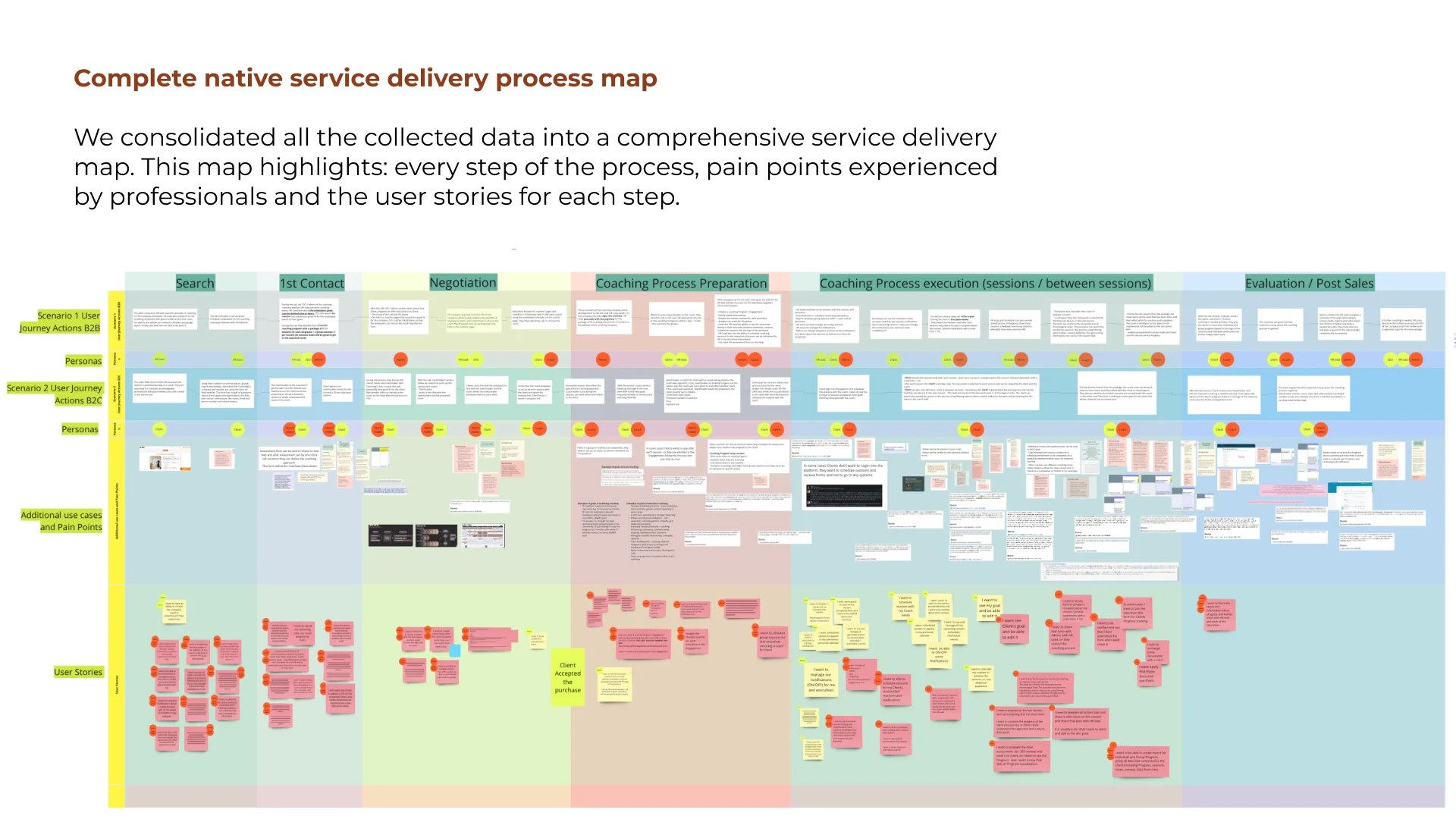
Master Process Map
Working with the Product Manager, we consolidated all three role-based maps into a single unified view: every service delivery step, every user action, every pain point enriched with user stories. A shared artifact the whole team could navigate and reference.
Profi.io Functionality Overlay
Finally, we mapped the master process against Profi.io’s existing features. This is where research became strategy, revealing exactly where the platform had gaps, where it had underutilized strengths, and where the clearest opportunities for improvement lived.
Step 6: Share Insights with the Team
Good research badly communicated is still wasted. So I tailored every presentation of the research insights to the audience, the context, and what would actually move them to act.
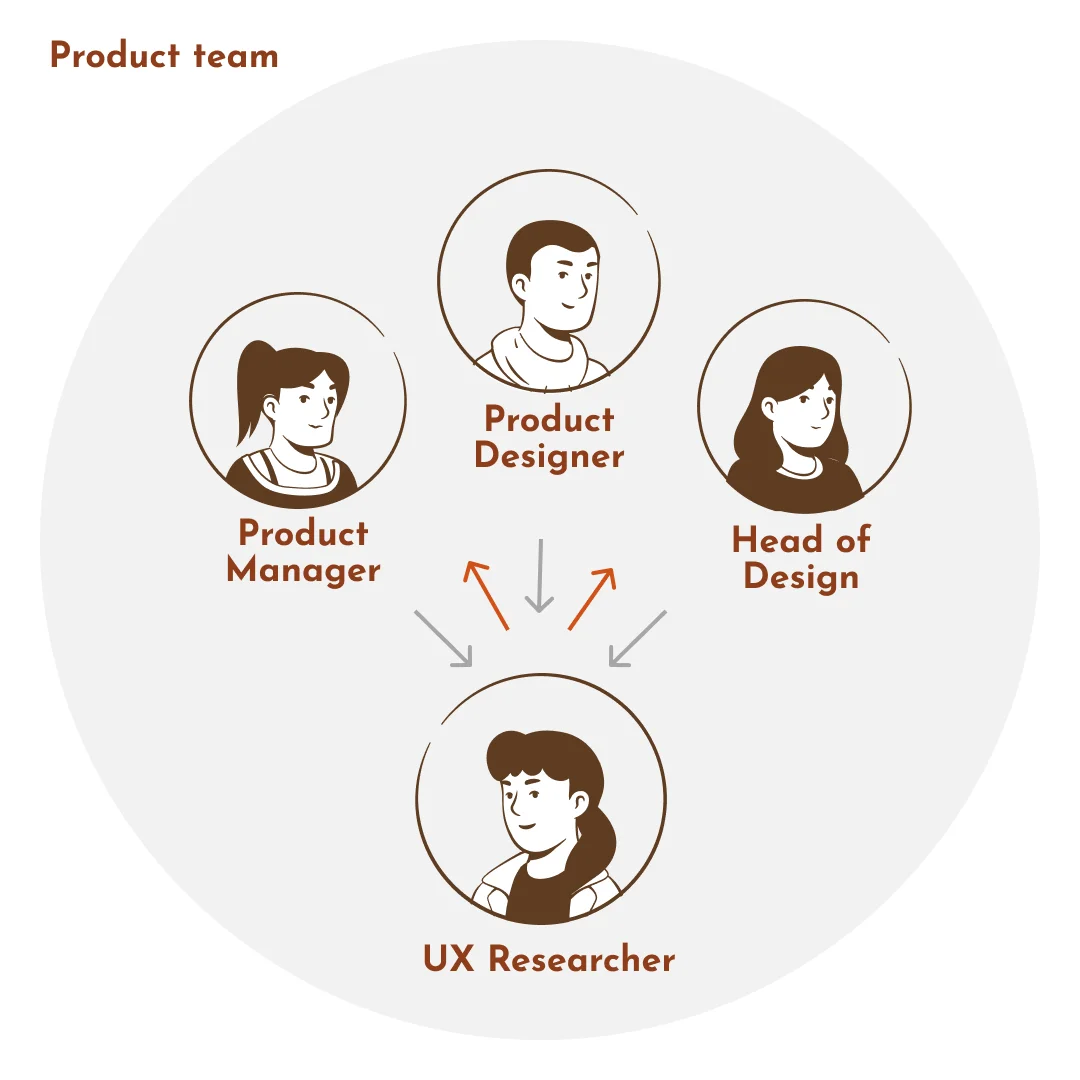
Process map sessions walked the core team through pain points tied to each workflow step, aligned on product priorities, and created space for questions.
Co-design sessions kept the user's voice present at every design stage, with interview evidence grounding key decisions as they were being made.
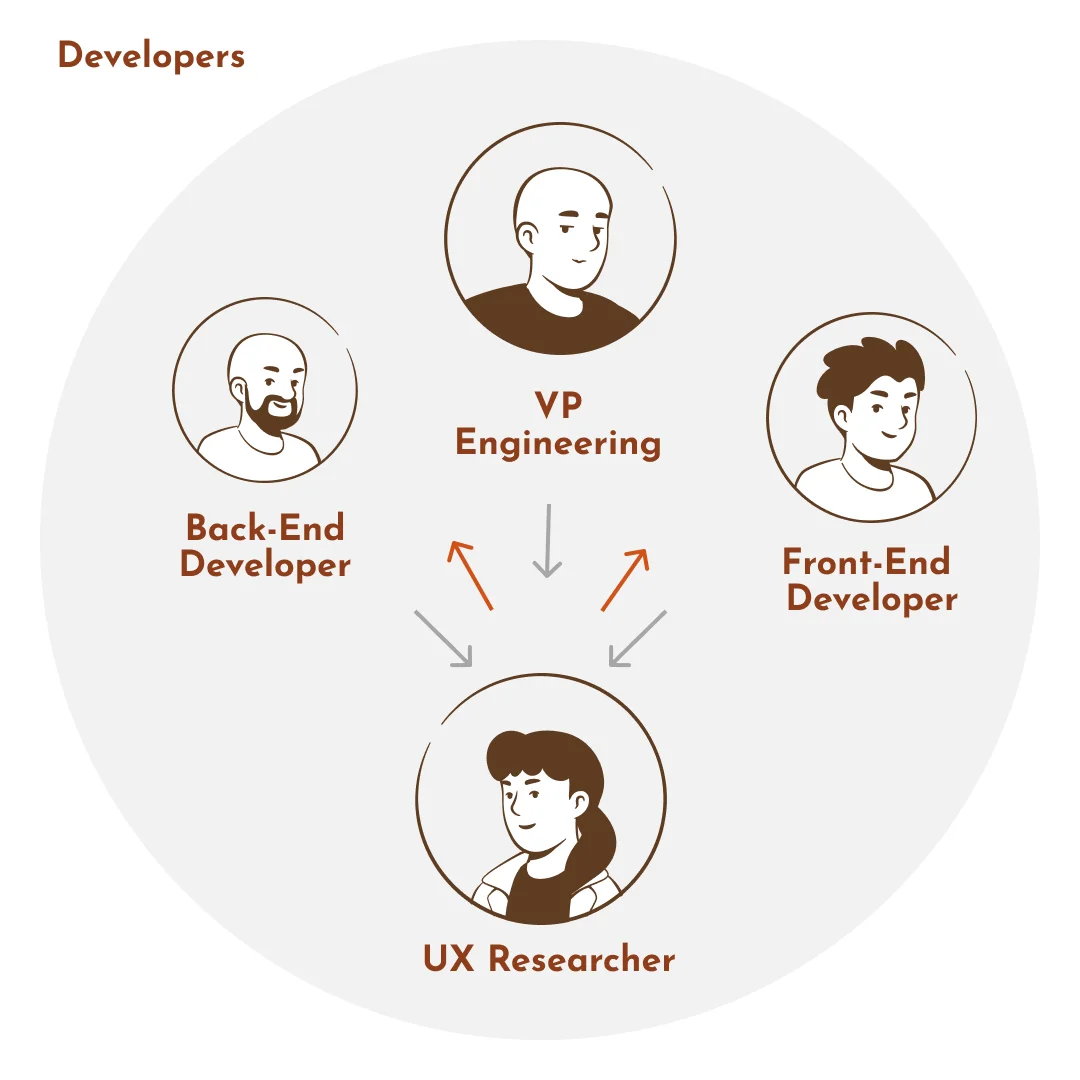
Developer presentations focused on technical pain points, quick wins, and honest conversations about feasibility.
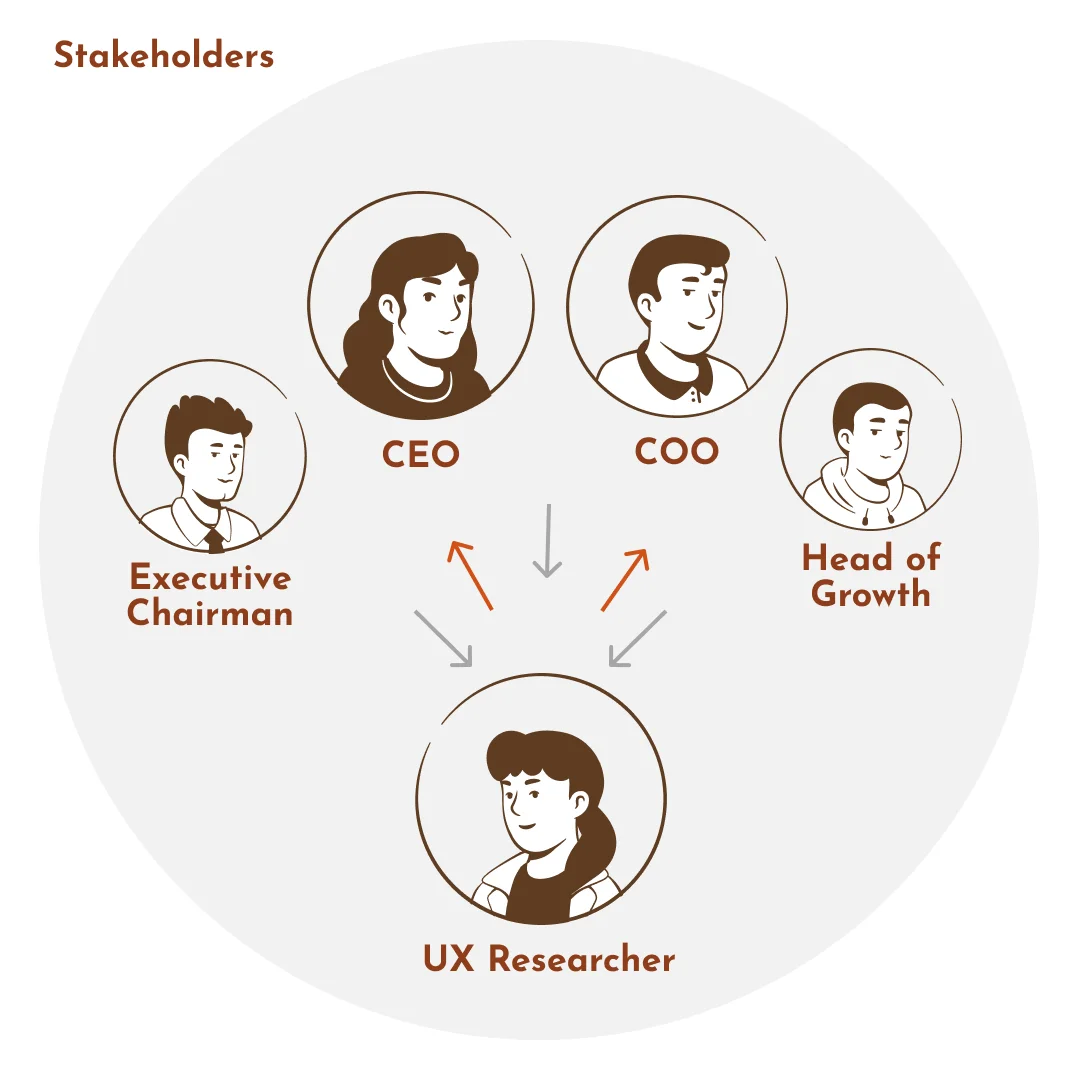
Stakeholder presentations followed three principles: tailor communication to the audience's familiarity with research, tie findings directly to business goals, and lead with storytelling: user quotes, clear visuals, and prioritized recommendations.
Step 7: Make Insights Accessible
Research only creates value if it travels. Most research dies in a slide deck. I built a lightweight infrastructure to make sure insights stayed alive, stayed findable, and reached the right people at the right moment.
A structured Notion workspace with recordings, transcripts, citations, and raw data. Fully searchable, and always accessible. It became a single source of truth the whole team could trust.
Artifact links embedded directly in reports and pinned in Slack, so insights surface exactly when decisions are being made.
Key findings shared proactively in team channels. Research that reaches people without being asked for is research that actually gets used.
Infrastructure alone isn't enough. I stayed available to clarify findings, translate insights into product decisions, and make sure research reached whoever needed it, whenever they needed it.
Key Insights & Decisions
Trainer Segment Mismatch
Trainers primarily need LMS (Learning Management System) functionality, which the platform cannot effectively provide. Their needs are fundamentally different from coaches and consultants.
Exclude trainers from the target audience, avoid marketing to them, and deprioritize trainer-specific feature requests to focus resources on the right ICP.
Flexible Engagement Needs
Coaches and consultants need the ability to create flexible client engagements with chronologically organized materials and clear progress tracking.
Consolidate the Programs and Packages features into a new Engagement feature that enables chronological material organization and progress tracking for both professionals and clients.
Scheduling as Primary Use Case
Scheduling represents the platform's primary use case but was cumbersome and created friction for both professionals and their clients.
Prioritize upgrading the scheduling experience as a key initiative — this directly led to the usability testing project documented in the previous case study.
Progress Visibility Gap
Both coaches and their clients lacked visibility into service delivery progress, making it hard to stay aligned and motivated throughout an engagement.
Introduce progress visualization features for both professionals and clients to improve transparency and engagement throughout the service delivery process.
Performance Analytics
Many coaches and consultants want quantifiable insights into their own performance but had no way to track or analyze their results within the platform.
Develop an intuitive reporting feature to help professionals track and analyze their results, supporting data-driven business decisions.
Challenges & Solutions
Respondent.io screener responses lacked accuracy — participants overstated client numbers to qualify for the study.
Conducted brief pre-interview verification chats with Respondent.io candidates specifically, while maintaining consistency across other recruitment platforms.
Team members unfamiliar with interviewing principles occasionally affected the conversation flow during sessions.
Organized 10-minute prep sessions before each interview reviewing main questions, background information, and core objectives. Reinforced essential rules: no product promotion, no leading questions, open-ended framing, and emphasizing observation over participation.
Participants struggled to explain their service delivery sequences clearly within the 60-minute session timeframe.
Prepared a Miro board used during interviews to visually illustrate processes as described. Drew service delivery schemas in real-time, ensuring all steps were captured in the correct order and making pain point mapping to specific steps more precise.