User Interviews for an AI Learning Platform
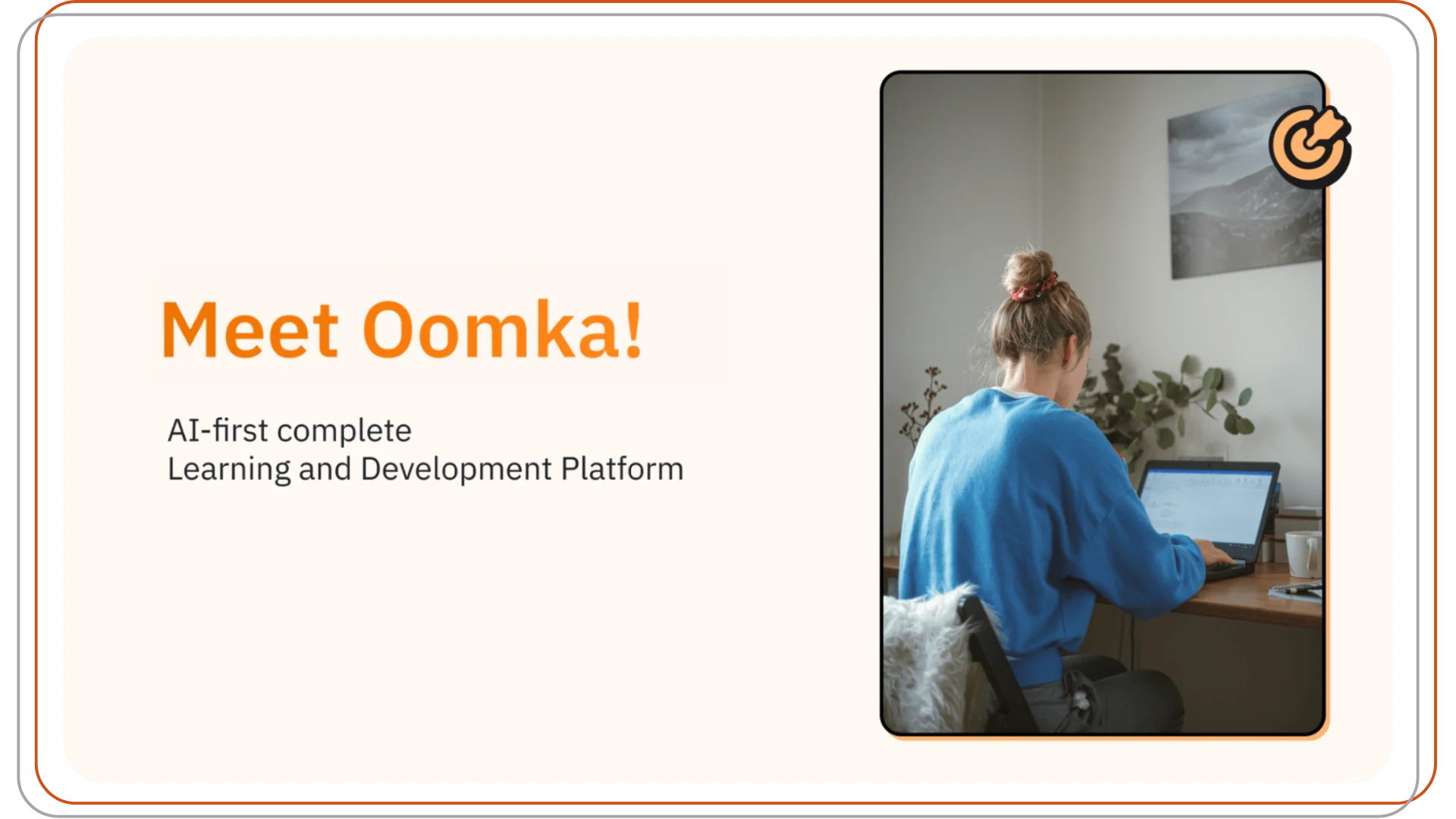
OOmka had a retention problem. Users would generate a course, close the window, and never come back. Enterprise L&D teams were curious about the platform but unconvinced it could fit into how they actually worked. The product needed two things: an explanation for why users dropped off, and an honest answer to whether B2B was a viable direction.
Research Impact
Seven in-depth interviews with L&D specialists surfaced 6 critical insights that reshaped the product strategy revealing a clear path from a B2C course generator toward an enterprise L&D acceleration hub.
L&D Specialists Interviewed
In-depth interviews with enterprise learning & development professionals revealed the full complexity of their course creation workflows.
Critical Insights Surfaced
From AI trust issues to personalization demand, research uncovered six key problems blocking both B2C retention and B2B adoption.
Strategic Directions Defined
Research produced a clear prioritized roadmap for both B2C experience improvements and a B2B enterprise positioning strategy.
My Role & Constraints
Scope of Work
- Planned and executed all research end-to-end
- Analyzed user workflows, feedback & behavior
- Screened and recruited participants
- Conducted 7 in-depth L&D specialist interviews
- Synthesized insights & recommended product strategy
- Evolving AI model during research period
- Limited analytics access
- Small team with limited bandwidth
- Limited budget
- Short timeline with tight scope
Research Methods
With a two-week timeline, I needed methods that would give both behavioral evidence and strategic depth.
Seven semi-structured interviews with L&D specialists, recruited independently through professional communities and LinkedIn outreach.
- Works in an L&D department
- Actively involved in the end-to-end course creation process
- Creates a minimum of 2 courses per year
This ensured every participant had direct, hands-on experience with the full course creation cycle, not a peripheral view of it. Interviews focused on workflow mapping, pain points, AI usage, and personalization needs.
Reviewed session recordings to observe how real users interact with the platform, where they hesitate, what they skip, and where they drop off after generating a course.
Key Insights
Users Overestimate AI Capabilities
Users assume the AI can deeply expand every topic and expect expert-level accuracy. When output doesn't meet expectations, trust drops and the course is abandoned.
Capabilities framing, transparent limitations, example prompts, and better quality signals to set the right expectations from the start.
Lack of Trust in Source Quality
Users want citations, authoritative sources, and validation. AI's generic content makes them feel the information is unreliable, a blocker for enterprise adoption.
Source mode, confidence indicators, linked reading, or integrated knowledge bases to give users trust signals alongside AI-generated content.
Retention Drops After Creation
Users forget about the course once they close the window. No reminders, no gamification, passive text-heavy structure, nothing pulls them back.
Notifications, streaks, quizzes, checkpoints, and micro-tasks to create re-engagement loops that bring users back to their courses.
L&D Specialists Face Heavy Pain Points
Unreliable AI output, confidentiality concerns, slow expert communication, multi-tool chaos, copyright issues, and the extreme cost of video production.
Position OOmka as an L&D workflow optimization tool, not just a generator, addressing the full spectrum of pain rather than a single step.
Personalization Demand Is Huge but Unmet
Specialists want role-based versions, competency-level tracks, and custom quizzes per learner, but creating personalized materials manually is impossible at scale.
AI-powered personalization is the biggest value driver for B2B, enabling role-based tracks and automated quiz generation at a scale humans can't match.
L&D Course Creation Flow
Understanding the full workflow revealed where AI could add value, and where it currently falls short.
How L&D Teams Use AI Today
AI already fits naturally into L&D workflows, but current tools require manual stitching together. OOmka has an opportunity to be the unified layer.
- ChatGPT
- Gemini
- Perplexity
- Midjourney
- BeautifulAI
- Microsoft AI
- Drafting commercial offers
- Creating quizzes and assessments
- Writing scripts and presentations
- Brainstorming formats and structures
- Research, summarization & formatting
- Image & video asset creation
Recommendations
Improve Consumer Experience
- Clarify what OOmka can and cannot do
- Add content source visibility and quality indicators
- Reminders to return to in-progress courses
- Mini quizzes after each chapter
- More interactive course elements
- Suggested prompts for easier iteration
- Contextual YouTube videos embedded in lessons
Support Real L&D Workflows
- Templates matching real course-creation structures
- Secure knowledge-base ingestion
- Confidentiality-safe enterprise mode
- AI-assisted expert interview summaries
- Role-based & competency-level personalization
- Automated quiz generation (unique per learner)
- Automated versioning of old courses